
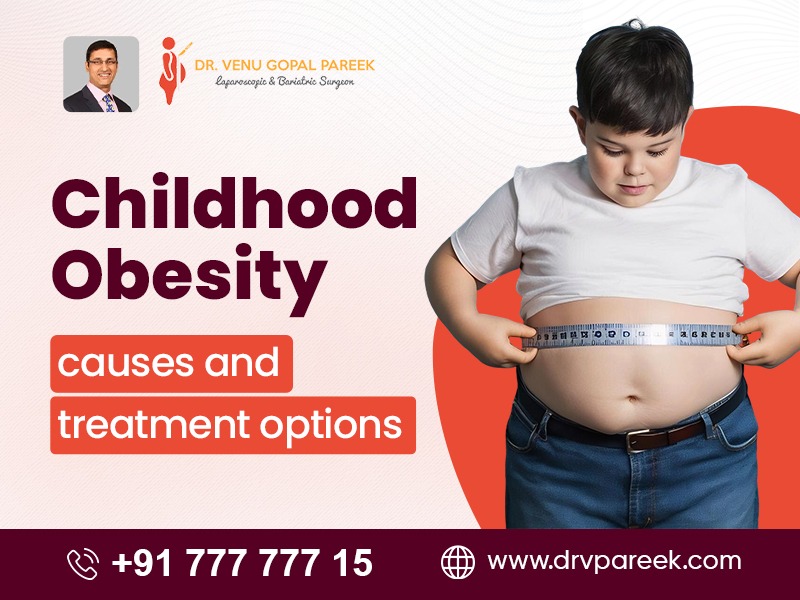
Childhood obesity – causes and treatment options
Childhood obesity in India is becoming a serious health concern. This is because over the past few years the number of childhood obesity cases has been gradually going up. This is due to a combination of factors such as unhealthy diets and a lack of physical activity.
Childhood obesity not only takes a toll on their physical health but also affects the emotional and social well-being of the child. Moreover, if you don’t do anything about it, the situation can get worse, and the child may be at greater risk of acquiring long-term chronic health complications like diabetes, cardiovascular problems, and hormonal imbalances.
Acknowledging the early signs and symptoms plays a crucial role in deciding timely treatment, such as taking nutritional advice, changing lifestyle, getting a proper medical check-up, and consulting an expert. It is very important for healthy growth and a happy future. Dr. Venugopal Pareek, a childhood obesity treatment expert in Hyderabad, provided his insights on a few aspects of childhood obesity, which include the primary causes of obesity in children, the effect it has on their health, and how weight loss experts can help with the treatment.
What is childhood obesity?
Childhood obesity refers to a state of accumulating excess fat in the child’s body, and it may interfere with health and growth. Body mass index (BMI) is the standard technique used by doctors to determine whether a person is obese, overweight, or underweight, and these charts are adjusted for age and gender. When it comes to children, experts also consider referring to the child’s growth patterns and performing a thorough physical examination. When children are growing, a certain level of weight gain is entirely normal, but gaining weight way above the standard that is considered healthy for their height and age is considered obesity.
Childhood obesity in India, especially in urban areas, is drastically increasing because children are easily attracted to sedentary lifestyles and overeating unhealthy foods. If we can identify the root cause and suppress it at the very beginning, then the prevention of complications and treatment becomes easy. We can even prevent childhood obesity in the first place.
Early signs of obesity in children
Obesity in children is a progressive condition, and its early signs may not be very noticeable. Identifying such changes timely is very important for timely treatment.
Here are some of the common and early symptoms:
Significant weight gain—children prone to obesity might continuously put on more weight compared to other children of the same age and height.
Problems during physical activities—the child may experience breathing problems, get tired easily, or simply refuse to play sports or outdoor games.
Skin problems—presence of stretch marks and thick, velvety skin patches (acanthosis nigricans), which is typically a sign of insulin resistance.
Problems related to sleep—the child may snore, have restless sleep, and have sleep apnea symptoms.
Changes in behavior and mood swings—The child may show signs of being less confident, irritable, or even isolated from others due to concerns over body image.
Causes and risk factors for childhood obesity
Most of the time, obesity in children is developed from a combination of factors, which include lifestyle, genetics, and medical conditions. It is essential to understand the causes and the risk factors so that one can prevent the problem at an early stage or help with treatment.
Here are the most common causes and risk factors for childhood obesity:
- Consuming an unhealthy diet and high-calorie foods (fast food, packaged snacks, sugar-sweetened beverages, and low-fiber meals) regularly leads to weight gain.
- Children who are physically inactive, who are always sitting and spending a lot of time in front of screens, and who are not involved in any outdoor games can all contribute to lower calorie burning and weaker metabolism. Over time, children gain weight.
- Genetics and family history of children can also increase the risk of developing obesity. It means if parents or close family members are overweight, diabetic, or obese, then their children are at higher risk of developing the same problems.
- Endocrine and metabolic abnormality symptoms, which include very high or very low thyroid, insulin resistance, or polycystic ovary syndrome (PCOS) in women, might also lead to gradual weight gain.
- Socio-environmental and lifestyle choices can also lead to weight gain.
- Poor dietary habits also increase the risk of obesity.
How to diagnose and treat childhood obesity?
The diagnosis of childhood obesity is made based on a thorough medical examination to determine whether the child’s weight gain is abnormal or due to growth. The following techniques can be used by the doctors to assess child obesity.
- Comparing growth charts and BMI of the child
- Physical check-up to rule out the signs of acanthosis nigricans, abnormal distribution of fat, or presence of an enlarged thyroid gland.
- Lab tests (blood tests) to identify metabolic or hormonal disturbances.
- Reviewing medical history of the personal and family
- Understanding eating habits
- Understanding physical activity levels
Tailored strategies that address both lifestyle and medical factors help children lead a normal life. If the weight gain is due to hypothyroidism, diabetes, or adrenal disorders, doctors start managing these disorders to prevent weight gain. A balanced diet and regular physical activities form the foundation for improving metabolism and overall health. Is your child obese? Looking for the best weight loss solutions for your child? Consult Dr. Venugopal Pareek, an experienced weight loss expert for children in Hyderabad. In rare and severe cases, particularly among younger adults, weight loss medication or bariatric surgery might be considered to achieve weight loss goals.