

How Doctors Diagnose Parathyroid Problems: Ultrasound, Blood Tests, and Treatment
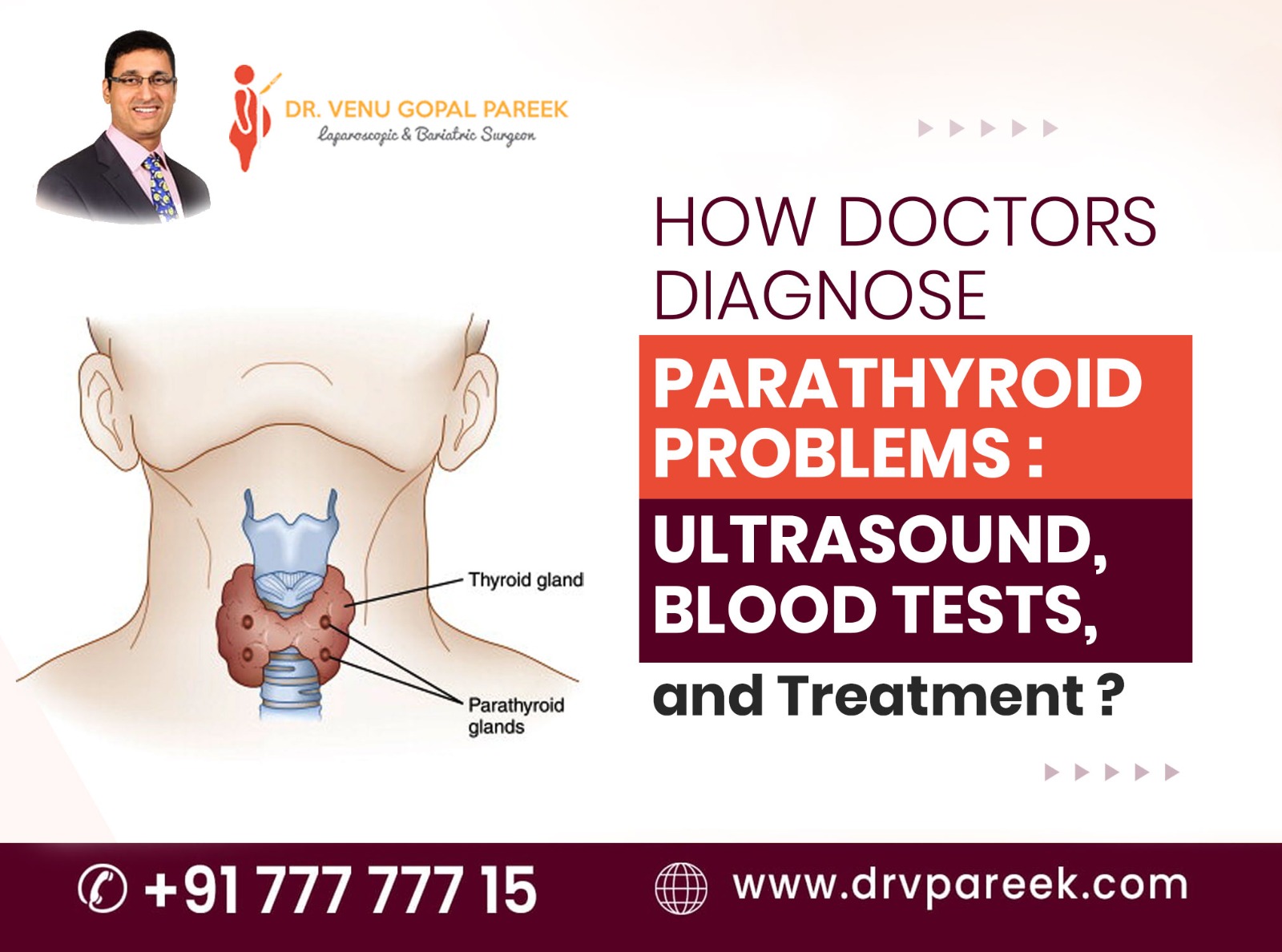
The parathyroid glands are four small glands located behind the thyroid gland. The thyroid gland is located in the front of the neck, just above the trachea. It’s a small, butterfly-shaped gland. They are the size of a rice grain, very small, and their function is to regulate calcium in the body. Calcium is important for brain function, muscle function, and bone strength.
Often, they are called the thermostat for calcium regulation. If you have too much calcium in the blood, the gland’s job is to make sure that calcium is excreted through the kidneys, and some of it is reabsorbed back into the bone. If you have too little calcium, they send out a signal through parathyroid hormone (PTH). This hormone goes to the bone and releases calcium from the bone. It also helps reabsorb calcium from the gut and allows absorption of calcium from the kidney, so that overall calcium levels remain adequate.
Most people have four glands. However, some individuals have a fifth gland, which may be located anywhere in the upper part of the neck or in the chest. Problems arise when the parathyroid glands are not working properly (overactive or underactive).
Primarily, parathyroid diseases are of three different types:
- Hyperparathyroidism
- Parathyroid cancer
- Hypoparathyroidism.
Hyperparathyroidism
Hyperparathyroidism (HPT) is one of the common parathyroid disorder. It occurs when one or more parathyroid glands become hyperactive. This leads to the secretion of excessive PT hormone by the glands. The excess PT hormone may increase the calcium levels in the blood, and this condition is called hypercalcemia. In most of the cases, this condition is caused by a benign tumor on these glands.
Occasionally, two or more parathyroid glands may be hyperactive. This condition is typically diagnosed in individuals aged 50-60 years. Women are approximately three times more likely to be affected by this condition compared to men. Some people have hypercalcemia caused by familial hypocalciuric hypercalcemia, a rare hereditary disease. Typically, this condition is not serious and may not require treatment in most cases.
In other complicated cases, such as kidney failure, the parathyroid glands become overactive, resulting in the overproduction of PTH, which is referred to as secondary HPT.
Parathyroid cancer
Parathyroid cancer is one of the underlying causes of hyperparathyroidism. This extremely rare condition usually affects people in their 50s. The chances of recurrence at the original site after treatment are high. However, controlling the calcium levels in the blood can slow down recurrence.
Early diagnosis gives a higher chance of survival. Besides, the complications arising from hypercalcemia are often a much greater risk to your health than the cancer.
Hypoparathyroidism
This is a condition where the body doesn’t produce sufficient PT hormones. Consequently, the calcium level in the blood becomes lower than normal. In most of the cases, the condition is a result of neck surgery or injury to the parathyroids. Apart from this, the condition develops when these glands are attacked by the patient’s own immune system.
Diagnosis of parathyroid diseases
One way your doctor may detect parathyroid disease is by measuring calcium and PTH levels in blood.
The following tests may be performed further to check for complications:
Bone densitometry (DEXA, DXA) is a procedure to evaluate bone loss. The procedure involves exposure to very small amounts of ionizing radiation for taking pictures inside the human body (mostly the lower spine and hips). DXA is non-invasive, simple, and quick.
Ultrasound is a procedure where sound waves are used to produce images of the body’s interior parts. Ultrasound is non-invasive, safe, and does not involve the use of radiation.
Computed tomography (CT) is an advanced technology that helps to create complete three-dimensional (3-D) images of the inside of the body. During a CT scan, a contrast material may be injected, and anesthesia is not required in this procedure. In this diagnosis procedure you will be made to lie on a table that slides into a tunnel-shaped machine, which is capable of taking the x-rays located along the tunnel. Most of the time this procedure is done in the outpatient center, and the images obtained are initially evaluated by the radiologist.
Magnetic resonance imaging (MRI) is a procedure used to generate highly detailed images of the inside of the body. In this procedure a very strong magnetic field and radio waves are used.
A 25-hydroxy-vitamin D blood test is done to keep track of the vitamin D levels in the blood of people because people with primary HPT have vitamin D deficiency.
Treatment for parathyroid disease
Various treatment options are available, which include medications, dietary supplements, monitoring, and surgery.
The surgical removal of overactive parathyroid glands is very effective in the majority of cases. Almost all patients with primary hyperparathyroidism (HPT) with apparent symptoms will get benefits from surgery. However, even those asymptomatic patients who meet the criteria for surgery are likely to benefit. The removal of one or more diseased parathyroid glands may result in increased bone density, fewer fractures, and a decreased risk of kidney stone formation.
Surgeons may use various methods to pinpoint the problematic gland(s) before the surgery. Four-dimensional computed tomography (4DCT) is one such diagnosis method that offers a far more detailed image than the standard CT procedure. Ultrasound is more commonly used to find benign tumors in one or more parathyroid glands.
Minimally invasive parathyroidectomy: The doctor extracts the abnormal gland through a tiny neck incision. The patient can be given either local or general anesthesia. The time required for the patient to recover is also shorter compared to the traditional procedure.
Open parathyroid surgery is a more invasive approach used to examine more than one gland. The surgeon makes a larger incision to look at all four glands and take out the overactive ones. The procedure usually entails a hospital stay of up to two days. General anesthesia is necessary.
The doctor will excise some of the tissue and send it for examination to a pathologist. This will let the clinician know whether the abnormal tissue was cancerous or benign.
Though the risk of complications from these procedures is very low, some patients may end up with damage to the nerves that control the vocal cords (speech can be affected). Some people might experience low calcium levels following surgery, so they might need to take calcium and vitamin D supplements for the rest of their lives.
Statistically, the incidence of complications is slightly higher when multiple tumors need to be removed. If you are suffering from any parathyroid problems, consult Dr. Venugopal Pareek, one of the best laparoscopic surgeons in Hyderabad. Call +91 91777 77715 for appointments.