Gallbladder Stones in Pediatric Age: An Emerging Problem
Gallstone problems are more commonly observed in adults, especially people above 40 years of age. In children it is rare. However, over the past few decades, the incidence of gallstone development in children has risen greatly. The gallbladder is a pear-shaped organ that plays an important role in the digestive system, located on the right of the upper abdomen. The key gallbladder functions include storing, concentrating, and releasing the bile fluid into the intestine when necessary, shortly after eating.
Around 2% of the child population are experiencing these gallstone problems. The incidence is even higher (around 5%) among obese children. Both boys and girls are at equal risk of developing gallbladder stones, especially in early childhood. However, the risk becomes significantly higher after puberty in females. This change might be due to hormonal changes during puberty in girls—cholesterol in blood increases.
Read Gallbladder Stones in Adults—Should I Have Gallbladder Surgery?
The incidence of gallstones is seven times higher in people living in the northern parts of India compared to the southern region people. Foods and water that people consume might be the main differentiating factors. The nature of the gallstones also varies—gallstones are mostly cholesterol and mixed texture in the northern and eastern parts of India—whereas in the southern part of India, pigment gallstones are commonly seen. When it comes to gallstones in children, the texture might be black pigmented, cholesterol, calcium carbonate, protein dominant, or brown pigmented stones.
In infants (below 2 years), gallstone problems nearly account for 10% of the total pediatric cases. Common symptoms children may experience include cholestatic jaundice, transient acholic stools, abdominal pain, and sepsis. The pain is most commonly experienced in the upper right portion of the abdomen. The pain may come and go and can be mild to intense. When the liver is affected by the gallstones, children may experience jaundice symptoms like dark urine or skin, and their eyes may become yellowish. However, not every child might experience symptoms.
Gallstones in children of age 2 to 14 years
- Account for almost 40% of pediatric gallstone cases.
- Children typically experience biliary symptoms, which include pain in the right upper quadrant or epigastric pain, with or without nausea, and vomiting.
- Around 25% of children have nonspecific abdominal symptoms.
- Around 20% of cases remain asymptomatic.
- Approximately 5–10% of pediatric cases may develop complications like acute cholecystitis, pancreatitis, or cholangitis.
Gallstones in children of age 14 – 18 years
- Account for almost 50% of cases.
- Almost has the same problems as pediatric cases; however, pain in the right upper quadrant might be more severe.
- May remain asymptomatic in most of the cases and be diagnosed incidentally.
Children with complaint of recurrent or intermittent abdominal pain should be assess for gallstones. Ultrasonography (USG) is the standard choice for diagnosing uncomplicated gallstones since it is a non-invasive, accurate, and radiation-free method. Some blood tests are also done to identify infection or pancreatitis.
Treatment is based on symptoms. Usually, the gallbladder stones in pediatrics disappear on their own; especially in case the symptoms are absent, the child can be kept under observation. If gallstones are not accompanied by symptoms, treatment may be delayed or not required. However, a child with severe biliary pain and other symptoms might need to have the gallbladder surgery (cholecystectomy).
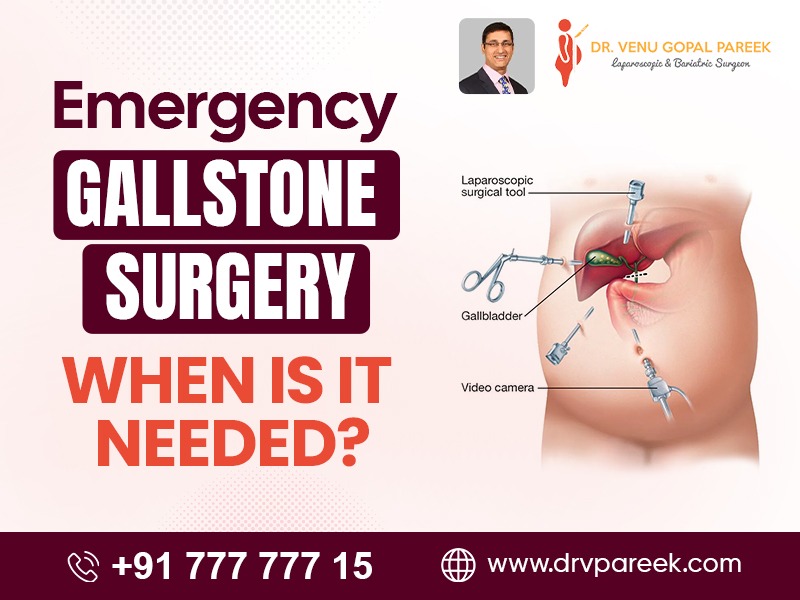
Laparoscopic cholecystectomy is the standard surgical procedure for symptomatic gallstones. Besides being a low-risk procedure, it causes minimal trauma, and children typically have very few post-surgical complications.
After the surgical procedure, children can go live their lives normally. People can live even without a gallbladder; the liver still produces bile, and it directly flows into the intestine instead of being stored in the gallbladder. Most of the time, people won’t experience any problems. Sometimes there might be mild symptoms like bloating, diarrhea, and indigestion, but these are usually temporary and can be avoided by limiting fatty foods.
If you have a history of gallstones, keep an eye on your children. Limit them from eating fatty foods, and let them be involved in regular physical activities to prevent gallstones, cholesterol stones in particular. For gallstone treatment, consult Dr. Venugopal Pareek, one of the best laparoscopic surgeons in Hyderabad. He has more than 17 years of experience in treating gallbladder stones in people of all ages. For appointments, call +91 91777 77715 and book your slot.