Emergency Gallstone Surgery — When Is It Needed?
Gallstones is one of the common health problems that affect millions of people around the globe. This medical condition has two faces; surgery is the only solution for some people with the problem, while some can live symptom-free and may never need any form of treatment. However, if you are living with gallstones, you need to know about the symptoms or complications that indicate the timing of gallbladder surgery. Remember the treatment choice for gallbladder stone pain depends on a number of factors like the severity of symptoms, the type of stones, and the overall health condition of the person.
Also, understanding the functioning of the gallbladder in the digestive system is extremely important. It is a small organ that looks like a pear fruit and is located just beneath the liver. Its primary function is to act as a storage for bile, which is produced by the liver. This bile fluid plays a key role in digestion because it helps the body to absorb fats and fat-soluble vitamins. Most of the time, the gallbladder performs its function without any problems, but gallstones may cause serious issues. From time to time the gallbladder discharges the bile fluid into the small intestine, facilitating the digestion of fats.
A gallbladder emergency in case of gallstones happens when stones block the bile ducts. This blockage may lead to gallbladder inflammation, infection, or other serious complications. In fact, it results in acute cholecystitis, which is characterized by intense pain and fever. If not treated soon enough, it can lead to life-threatening complications.
Many of you would be surprised to learn that gallbladder emergencies are pretty frequent. In India, millions of people suffer from gallstones every year, and many of them require emergency surgery. Understanding the risks and symptoms of gallstones is very helpful.
Read Types and symptoms of gallbladder stones for more detailed information.
When people end up needing gallbladder surgery
Gallbladder is removed only when there is no choice of treatment. Gallstones are one of the main causes of gallbladder removal, especially when it starts to exhibit symptoms repetitively or causes any other complications; in such cases, doctors purpose a gallbladder removal. The real problem is not the presence of gallstones; it is their effect on the natural flow of bile that induces pain, inflammation, or infection.
Many people are living with gallstones for years, and some people even don’t know they exist until diagnosed. Surgery is necessary when symptoms appear repeatedly or due to complications, which is why knowing why you should prepare yourself for gallbladder surgery helps you feel less anxious and reduces problems during and after surgery.
Constant pain in the upper right abdomen—pain is the common symptom many individuals with gallstones experience; severe and consistent pain in the right side of the upper abdomen is one of the main reasons for gallbladder surgery. This pain typically comes suddenly and will be severe, especially after eating, in particular after a fatty meal.
People may experience a sharp pain or a constant pressure, and it may last for a few minutes to several hours. A persistent recurrence of this pain could be the struggle of the gallbladder to empty bile due to gallstones.
Radiating pain to the back or shoulder—pain that started in the gallbladder often radiates to the right shoulder or upper-back areas. The reason is the fact that gallbladder nerves share the same pathways with these body parts.
This radiating pain is a very strong indication that the gallbladder is the cause of the problem, particularly if it happens after eating or at night.
Nausea and vomiting after meals—It might not be so obvious, but nausea or vomiting after meals is indeed a strong indication that the gallbladder is not performing well. If bile does not reach the digestive system, the whole process of digestion becomes difficult. Especially fatty foods can be a real problem because without proper bile release, they are hard to digest.
In case of recurring nausea combined with abdominal pain, it is an indication that the gallbladder is not functioning well, and therefore it has to be removed.
Bloating, indigestion, and fullness—most people don’t consider bloating or indigestion a serious stomach problem. However, following a meal, if you experience continuous bloating, buildup of gas, and a sensation of being full, these are some of the symptoms of gallbladder disease.
These symptoms develop either due to inadequate bile production or improper timing of bile flow to the intestine. In case the symptoms persist even after diet change, it is time for a health evaluation.
Fever and signs of infection—fever combined with stomach pain is a very clear and strong indication that you shouldn’t ignore because these symptoms might be due to an infected or inflamed gallbladder. This is caused by the obstruction of bile flow for a long time, and this condition is called cholecystitis.
Infection is one of the reasons why gallbladder removal is seen as an emergency. Leaving it untreated could result in serious complications during or after the gallbladder surgery.
Yellowing of eyes or skin—a condition called “jaundice,” which is caused when the gallbladder fails to drain the bile properly and it accumulates in the bloodstream. This could happen when gallstones block the bile ducts.
Jaundice is a severe health condition that requires immediate medical attention. In such situations, a gallbladder removal operation or other procedures might be necessary to restore bile flow.
Repeated gallbladder attacks—also called biliary colic—are episodes of sudden and intense abdominal pain. A gallbladder attack for the first time can be treated with medication, but repeated attacks are a sign that you have an ongoing issue that needs to be resolved. Moreover, with each attack, the risk of complications is also increased.
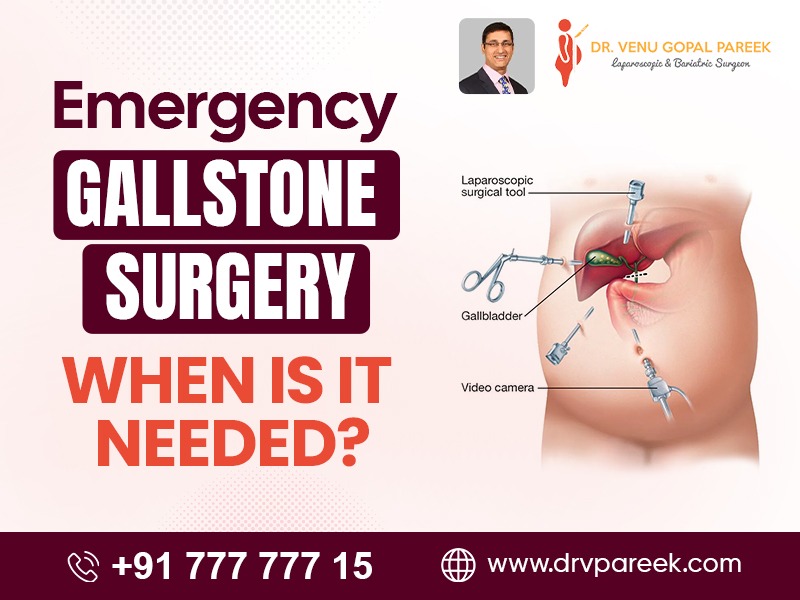
Surgical removal of the gallbladder (laparoscopic cholecystectomy) is the best and usual doctor recommendation once the attacks get frequent, even in the absence of any major damage visible on the imaging tests. This is because the gallbladder removal is the only way to get rid of the attacks completely.
Gallbladder inflammation observed on scans—during an ultrasound or any other type of scan performed for abdominal pain sometimes uncovers gallbladder problems. Thick gallbladder walls, swelling, or stones trapped in the gallbladder are the signs of a chronic condition.
Sometimes the pain may be mild. However, these symptoms usually indicate that in future the gallbladder might cause problems. Surgery is recommended to prevent the possibility of a medical emergency.
Why is gallbladder surgery preferred over long-term medication?
It challenging to get gallstones to dissolve with medication. Painkillers and antacids just provide temporary relief from the symptoms but do not treat the core problem. The gallbladder is still diseased, and there is a possibility that the symptoms recur.
The source of the problem is eliminated once and for all with the help of laparoscopic cholecystectomy, the removal of the gallbladder. That is why, in most cases, doctors suggest surgery rather than treating symptoms repeatedly.
Are you dealing with gallbladder problems? Looking for a gallstone treatment but worried about complications? Please do not delay any further; reach out to Dr. Venugopal Pareek, one of the best laparoscopic surgeons in Hyderabad. He has a team of experts who provide empathetic care.