
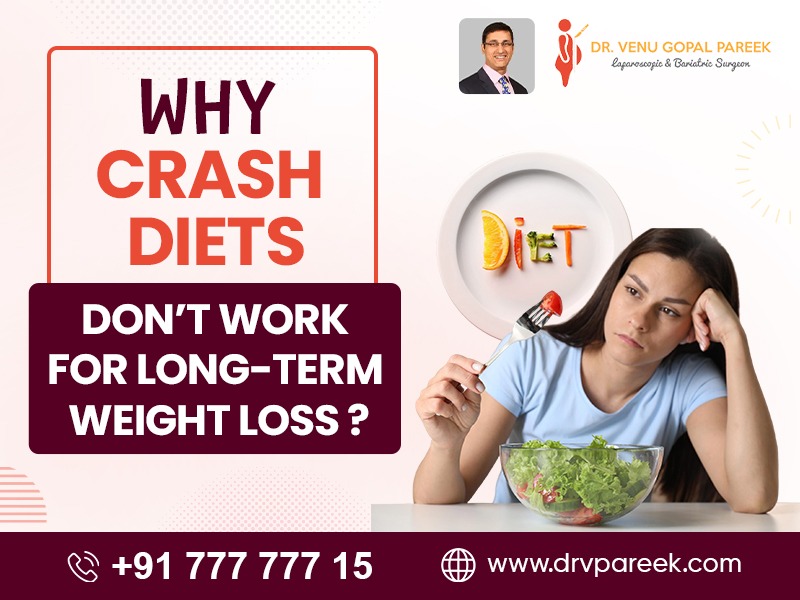
Why Crash Diets Don’t Work for Long-Term Weight Loss ?
In this modern world, quick fixes and miracle solutions are taking center stage in every area of life. In case of obesity, a health condition, crash diets have taken center stage in recent years because they promise rapid results, as people seek. Considering unfavorable feedback from many people, is it really worth it? Let’s take a deep dive into these extreme approaches and understand whether they are healthy practices.
“Crash diets” refers to following a wide range of restrictive dietary methods in order to lose weight. Most of these crash diets severely restrict calorie intake or certain food types over a short period of time. Many people are attracted to these crash-dieting methods and practice them to achieve rapid weight loss without taking any expert advice.
Do crash diets ever work?
The effectiveness of a crash diet depends on many factors, especially your goals. However, it’s important to evaluate the risks and benefits and first discuss them with a healthcare professional, for example, a weight loss expert, dietitian, etc.
In some cases, crash dieting may be harmful, so it is better not to experiment with these extreme methods. Experts strictly suggest that children and pregnant women should not try these crash diets, and moreover, people with certain medical conditions like heart problems, kidney diseases, certain types of liver diseases, type 1 diabetes, gout, etc., are also advised not to try them.
Some athletes might use certain types of ‘crash dieting’ to enhance their performance or results. If you are an athlete and if you follow this approach, it might harm your health in the long run. This is why reaching out to a dietitian will not only help you to understand how this method may or may not work but also prevent you from making poor choices.
Some people might want to lose weight rapidly before a surgery or any other medical treatment, and they might choose this crash diet approach, and it is not recommended with any guidance from experts. Your healthcare team will find the best possible and safest way to do this, even if a crash diet is necessary. Most often, you will be referred to a dietitian for customized dietary guidance.
If you are overweight or obese and want to find a method to achieve long-term weight loss and management, then crash dieting might not be effective. Studies have shown that initially you may lose weight quickly from crash dieting, but in the long run you will gain weight. The reason behind this is that obesity is a complex health condition influenced by many factors.
Crash diets for quick weight loss might seem tempting, but look at these statistics:
- Around 80-95% of people who opted to lose weight through dieting are gaining back the lost weight over time.
- Repeated cycles of losing and gaining weight, called the “yo-yo dieting pattern,” increase the risk of developing various cardiovascular diseases.
- Extreme calorie restriction in these dieting patterns can result in muscle loss; around 25% of the weight lost is due to lean body mass.
These aren’t just numbers; they represent countless individuals caught in the frustrating cycle of weight loss & regain, often feeling defeated and discouraged.
Why Crash Diets Fail
Metabolic Slowdown
When you reduce your consumption of calories, your metabolism slows down. This change makes it difficult to lose weight and makes it easy to gain back the weight you have lost.
Nutrient deficiencies
Often, extreme diets offer limited food choices in which the vital nutrients are deficient. This may result in tiredness, a weakened immune system, and various other health problems.
Unsustainable Habits
Most crash diet programs are temporary, and they do not prepare you for long-term healthy eating habits. As a result, once the diet period is over, you may probably switch back to your old eating habits, which results in gaining the lost weight.
Psychological Impact
Since crash diets follow very restrictive approaches, they may contribute to developing an unhealthy relationship with food. In the worst cases, they may lead to severe disordered eating patterns.
Muscle Loss
Quick weight loss usually results from both muscle and fat loss. The loss of muscle tissue slows down your metabolism, the rate at which your body burns calories.
What Actually Works: The best standard approach for weight loss
Losing weight around 0.5 to 1 kg a week is considered a standard and practical approach. At this pace, you will mostly lose fat, and more or less your muscle mass is preserved.
Focus on a balanced, nutritious diet, which is centered around wholesome foods, lean proteins, healthy fats, and complex carbohydrates.
Do physical activities regularly because they not only help to burn calories and build muscle mass, but they also boost your metabolism. Along with cardio, throw in some strength training as well.
Paying close attention to your hunger needs and fullness signals so that you don’t overeat. Eating slowly, without any distractions, is called mindful eating, and it helps you to recognize when you are satisfied.
Quality sleep is very important to stabilize hormones that are responsible for hunger and fullness. One should get 7 to 9 hours of night sleep per day.
Chronic stress is one of the universal factors that causes weight gain. Practicing stress-relieving techniques like meditation is one of the proven ways to relieve stress.
Drink more water and keep yourself hydrated. Sometimes it can be mistaken for hunger when your body needs fluids.
Having a support system in the form of your friends and family to back you in every situation would be great. Besides that, you can also join support groups for weight loss, which is an ideal option.
If you are truly committed to losing weight, speak to a doctor or a registered dietitian for professional guidance. They will help you build a solid weight loss plan according to your needs and guide you in the right direction.
Achieving stable weight loss requires patience and self-compassion because it takes time. Remember to be gentle with yourself even when you feel like giving up.
Everyone’s weight loss journey is unique. Weight loss methods that worked for one person successfully may not work with the lifestyle of another. Your key goal should be finding a balanced weight loss method that will not only be suitable to your body and your lifestyle but also be one that you can remain committed to for a long time.
Are you obese and obsessed with losing weight? What sustainable techniques have you come across that actually work? No clarity yet; consult Dr. Venugopal Pareek, one of the best weight loss experts in Hyderabad. With nearly 2 decades of experience, he can become a game changer in your weight loss journey. He has a team of experts with experienced physicians and qualified dieticians who can guide you and support you till you achieve your weight loss goals. Building a healthier and sustainable lifestyle is always in your hands.